
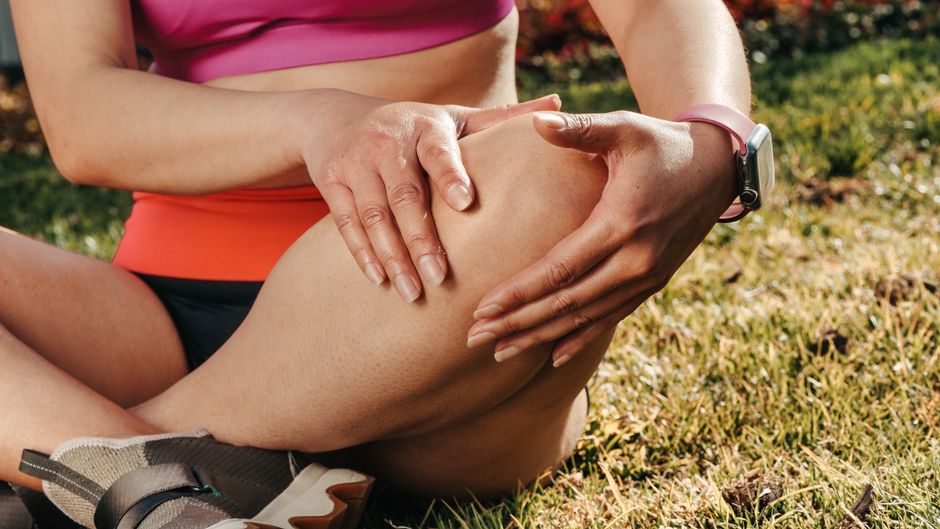

Most people who tear a meniscus don’t realize it right away. The knee twinges, swells a little, and after a few days of ice and ibuprofen it seems to settle down. Then it catches while you’re walking down the stairs, or aches at night, or gives way when you step off a curb. If that pattern sounds familiar, it’s worth understanding what a meniscus tear actually feels like — and why “waiting it out” isn’t always the right call.
What the Meniscus Does, in Plain Terms
Each knee has two menisci: C-shaped wedges of tough cartilage that sit between the thigh bone and shin bone. They act as shock absorbers and help distribute your body weight across the joint. Without them, the ends of your bones would grind against each other with every step.
When a meniscus tears, the smooth mechanics of the knee are disrupted. Sometimes a flap of cartilage floats loose in the joint. Sometimes the tear irritates the lining of the knee and produces swelling. Either way, the knee stops behaving like a knee.
The Moment of Injury: Not Always Dramatic
In younger, active patients, a meniscus tear often happens in a single moment — a pivot on the soccer field, a deep squat at the gym, a hard cut while skiing at Bogus Basin. Many people describe a distinct pop, followed by pain deep inside the knee. Swelling usually shows up within a day.
In adults over 40, tears are often more gradual. The cartilage weakens with age, and a tear can develop from something as ordinary as standing up from a low chair or kneeling in the garden. There may be no obvious injury at all — just a knee that started hurting one week and hasn’t stopped since.
The Symptoms That Point to a Meniscus Problem
A few signs tend to separate a meniscus tear from a routine strain or bruise. Swelling that comes and goes over weeks, especially after activity, is common. So is a deep, sharp pain along the inside or outside of the knee joint line — not on the kneecap, but slightly to one side.
The more telling symptoms are mechanical. Catching, clicking, or a sensation that something is moving inside the joint. Locking, where the knee gets stuck at a certain angle and won’t straighten fully. Giving way, where the leg buckles unexpectedly when you put weight on it. Squatting, twisting, and pivoting usually make things worse. Stairs — especially going down — often become a reliable trigger.
How to Tell It Apart from a Simple Strain
A garden-variety knee strain tends to hurt everywhere, feel stiff in the morning, and steadily improve over one to two weeks. A meniscus tear is more focal and more stubborn. Pain stays localized to one spot along the joint line. Swelling recurs after activity. Range of motion may feel restricted, as though something is physically in the way.
Time is another clue. If a knee injury is still limiting you at the four-to-six week mark — still swelling, still catching, still keeping you off your normal activities — it’s no longer a strain that will resolve on its own.
When to See a Surgeon
Not every meniscus tear needs surgery. Many small tears, particularly degenerative ones in older adults, respond well to physical therapy, activity modification, and time. But some symptoms warrant a specialist’s opinion sooner rather than later.
Book an evaluation if your knee locks and won’t straighten, if it repeatedly gives way, if swelling keeps returning weeks after the initial injury, or if you can’t return to walking, working, or exercising the way you did before. A younger patient with a fresh tear from a sports injury should also be seen promptly, because certain tear patterns heal much better when they’re repaired early. At BlackRock Orthopedics in Meridian, patients across the Treasure Valley are typically evaluated with an exam and imaging — usually an MRI — to determine what kind of tear is present and whether meniscus surgery is the right path.
What Treatment Actually Looks Like
If surgery is recommended, the procedure is almost always arthroscopic: two small incisions, a camera, and specialized instruments used to either trim the damaged tissue or stitch the tear back together. Most patients go home the same day. Recovery varies with the type of repair, but many people are walking without crutches within a couple of weeks and back to full activity within a few months.
For patients considering meniscus surgery in Boise or the surrounding communities, the goal isn’t just to relieve pain in the short term. It’s to preserve as much healthy cartilage as possible, because the meniscus you keep today protects the joint you’ll be walking on twenty years from now.
A Practical Next Step
If your knee has been swelling, catching, or giving way for more than a few weeks, stop guessing. Track your symptoms for a few days — when the pain shows up, what movements trigger it, whether the knee ever locks — and bring that information to an orthopedic evaluation. A straightforward exam and, if needed, an MRI can usually answer the question quickly, and knowing what’s actually going on inside the joint is the first real step toward getting back to the activities you’ve been avoiding.
Featured image: Photo by Towfiqu barbhuiya on Pexels.