

Shoulder pain has a way of sneaking up on people. One morning you reach for a coffee mug and feel a sharp twinge; a week later you can’t sleep on that side. For active adults in the Treasure Valley — the gardeners, the weekend golfers, the pickleball regulars — figuring out what’s actually wrong is the first step toward feeling better. The shoulder is a complicated joint, and “rotator cuff” gets blamed for a lot of problems that turn out to be something else entirely.
Why the Shoulder Is So Easy to Misread
The shoulder has the widest range of motion of any joint in the body, and it pays for that mobility with stability. Four muscles and their tendons (the rotator cuff), a ball-and-socket joint, a separate joint at the top of the shoulder, several bursae, and a ring of cartilage called the labrum all sit in a small space. When one structure is irritated, the others usually compensate, which muddies the picture.
That’s why two people with nearly identical symptoms can have very different diagnoses. The pain pattern, the movement that triggers it, and the time of day it shows up all matter more than the location alone.
What Rotator Cuff Trouble Actually Feels Like
True rotator cuff problems — whether tendinitis, a partial tear, or a full-thickness tear — tend to share a few features. Pain often sits on the outside of the upper arm rather than the top of the shoulder. Reaching overhead, behind your back, or out to the side hurts in a predictable way. Lying on the affected side at night is uncomfortable, and many people describe weakness when lifting a gallon of milk or a hair dryer.
Cuff tears can happen suddenly from a fall or a heavy lift, but more often they develop slowly over years of use. Idaho’s outdoor culture — chopping wood, casting a fly rod, hauling kayaks — tends to accelerate that wear-and-tear pattern in adults over 50.
Conditions That Mimic a Rotator Cuff Tear
Frozen shoulder, or adhesive capsulitis, is the most common mimic. It causes a deep, aching pain and a striking loss of motion in every direction, including when someone else tries to move your arm for you. A rotator cuff tear usually preserves passive motion even when active motion is limited. Frozen shoulder is especially common in adults between 40 and 60 and in people with diabetes or thyroid conditions.
Shoulder arthritis is another impostor. It typically produces a grinding sensation, stiffness that’s worst in the morning, and pain that’s deeper inside the joint. AC joint problems — arthritis or sprains at the small joint on top of the shoulder — create pinpoint pain you can usually touch with one finger, often after a fall onto the shoulder or years of bench pressing.
When the Pain Isn’t From the Shoulder at All
This catches people off guard. Pinched nerves in the neck can send pain down into the shoulder and arm, often with tingling or numbness in the fingers. If turning your head changes the pain, the cervical spine is a likely suspect. Biceps tendon problems produce pain in the front of the shoulder that travels down the upper arm, especially with lifting palm-up.
Less commonly, gallbladder issues or heart conditions can refer pain to the right or left shoulder respectively. Sudden, unexplained shoulder pain accompanied by chest pressure, shortness of breath, or sweating is a reason to call 911, not your orthopedist.
Simple Self-Checks Before Your Appointment
A few observations at home can help your visit go faster. Note whether you can raise your arm overhead on your own, and whether someone else can raise it for you without pain. Try reaching behind your back as if tucking in a shirt. Press on the top of your shoulder and the outside of your upper arm to see which spot reproduces the pain. Pay attention to whether ibuprofen helps, whether ice or heat feels better, and what positions wreck your sleep.
None of this replaces an exam, but it gives a sports medicine physician in Meridian a much clearer starting point and often shortens the path to the right imaging and treatment.
What to Expect From a Consultation
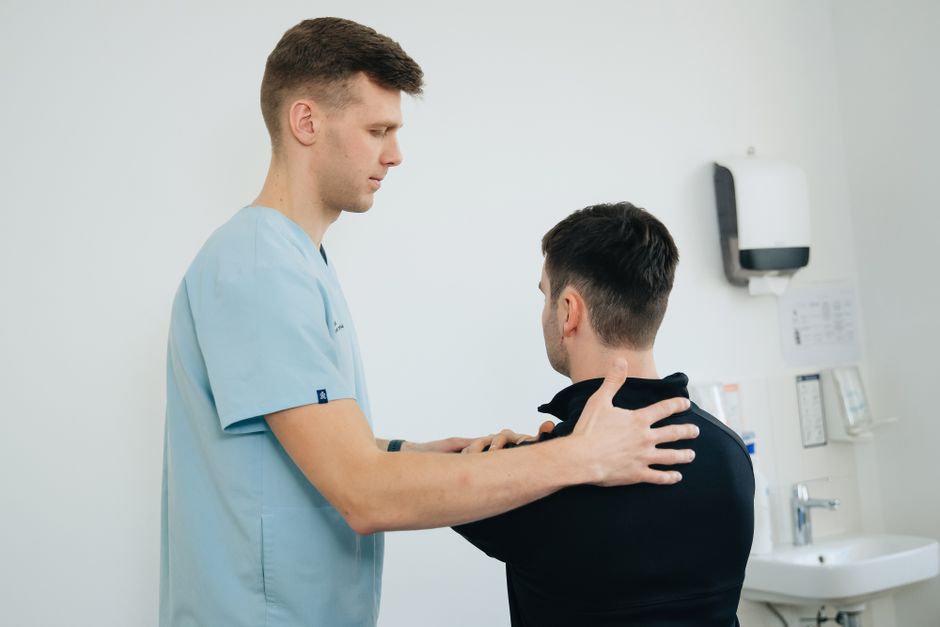
A thorough shoulder evaluation usually takes 20 to 30 minutes. Expect questions about how the pain started, what makes it worse, and what activities you want to get back to. The physical exam involves a series of specific movement tests — lifting against resistance, rotating the arm, checking stability. X-rays are common at the first visit; MRI is reserved for cases where the diagnosis isn’t clear or surgery is on the table.
Most shoulder problems improve without surgery. Physical therapy, activity modification, and sometimes a targeted injection resolve the majority of rotator cuff tendinitis, frozen shoulder, and early arthritis cases. Surgery enters the conversation when conservative care has been given a fair trial or when a clean tear in a younger, active patient is unlikely to heal on its own.
A Practical Next Step
If shoulder pain has lasted more than two or three weeks, is disrupting sleep, or is keeping you off the golf course or out of the garden, it’s reasonable to get it evaluated rather than wait it out. Bring a short written summary of when the pain started, what aggravates it, and what you’ve already tried. A focused visit with a sports medicine team in Meridian can usually sort rotator cuff problems from the other contenders in a single appointment and put you on a clear plan — whether that’s therapy, an injection, or a surgical consultation. The sooner you know what you’re dealing with, the sooner you can get back to the activities that brought it on in the first place.
Featured image: Photo by Funkcinės Terapijos Centras on Pexels.