
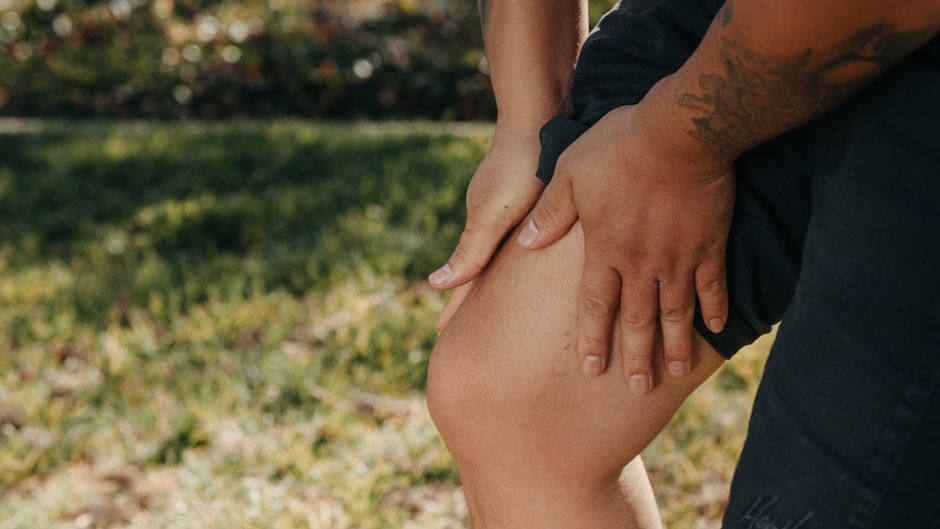

Every spring, orthopedic clinics across the Treasure Valley see the same pattern. The weather warms up, the lawns need attention, and after a weekend of mulching, digging, and hauling bags from the garden center, knees that felt fine all winter start to ache. Some of that soreness is harmless. Some of it is the first sign of a problem worth taking seriously.
The May Spike in Knee Pain
From November through March, most adults move less. We sit more, walk on flat indoor surfaces, and rarely spend hours squatting, kneeling, or lifting. Then April and May arrive, the snow melts off the Boise foothills, and people try to compress a full season of yard work into a few weekends.
The result is predictable. Muscles that have been quiet all winter are suddenly asked to stabilize a knee through hundreds of squats while planting, or absorb the impact of pushing a mower across uneven ground. Pain that may have been simmering quietly for months finally gets loud enough to notice.
What Yard Work Actually Asks of Your Knees
Gardening looks gentle, but it is hard on joints. Kneeling on hard ground compresses the kneecap against the bones beneath it. Standing up from a squat with a bag of soil in your arms loads the knee with several times your body weight. Twisting to pull a weed while your foot stays planted puts shear force through the meniscus, the cartilage cushion inside the joint.
Repeat any of these motions for three or four hours, and even a healthy knee will complain. A knee with mild arthritis, an old sports injury, or a meniscus tear that had been silent will complain much louder.
Normal Soreness Versus a Warning Sign
The good news is that most post-yard-work knee pain is muscle soreness, not joint damage. It shows up the day after activity, feels achy and diffuse, improves with rest, ice, and an over-the-counter anti-inflammatory, and is mostly gone within three to five days. Stiffness in the morning that loosens up within ten or fifteen minutes also falls in the normal range.
Warning signs are different. Sharp pain in a specific spot, swelling that lasts more than a few days, a knee that catches or locks when you bend it, instability or a sense that the knee is going to give out, and pain that wakes you at night all suggest something structural is going on. So does pain that does not improve at all after a week of rest.
The Injuries We See Most Often in Spring
Three problems dominate the spring caseload. The first is a meniscus tear, often a degenerative tear in someone over fifty who twisted the knee while standing up from a kneeling position. The hallmark is pain along the inside or outside of the joint line, sometimes with clicking or a feeling that the knee is briefly stuck.
The second is a flare of osteoarthritis. Patients often describe it as “I knew my knee was a little arthritic, but it never bothered me until this weekend.” The cartilage was already thin, and a heavy day of activity inflamed the joint. The third is patellar tendinitis or kneecap pain, common in people who spent hours on a riding mower or doing repeated step-ups while pruning trees.
What to Try at Home First
If your pain looks like ordinary soreness, the standard approach still works. Take a few days off from heavy yard work. Ice the knee for fifteen or twenty minutes a couple of times a day. If your physician has cleared you to use ibuprofen or naproxen, a short course can quiet the inflammation. Gentle walking on flat ground is better than complete rest, which tends to stiffen the joint further.
When you go back to the yard, break the work into shorter sessions, use a kneeling pad, and alternate tasks so you are not doing the same motion for hours. A simple garden stool can save a knee a remarkable amount of wear.
When to See an Orthopedic Specialist
If knee pain in the Treasure Valley keeps you from sleeping, from walking your normal distance, or from doing the activities you care about — whether that is hiking the Boise River Greenbelt, golfing at Lakeview, or just keeping up with grandkids — it is worth getting evaluated. The same goes for any knee that swells repeatedly, locks, or feels unstable.
An orthopedic visit usually involves a focused exam and, if needed, an X-ray in the office. Many problems can be managed without surgery through physical therapy, an injection, or activity modification. Knowing what is actually wrong is the first step in deciding what to do about it, and it almost always beats guessing.
A Practical Next Step
If your knee has been sore for more than a week after a heavy weekend in the yard, or if anything about the pain feels different from what you have experienced before, schedule an evaluation rather than waiting for fall. Spring is a long season in Meridian and the surrounding valley, and a knee that hurts in May will usually hurt more by July if it goes unaddressed. A short visit now often prevents a much bigger conversation later.
Featured image: Photo by Kindel Media on Pexels.