
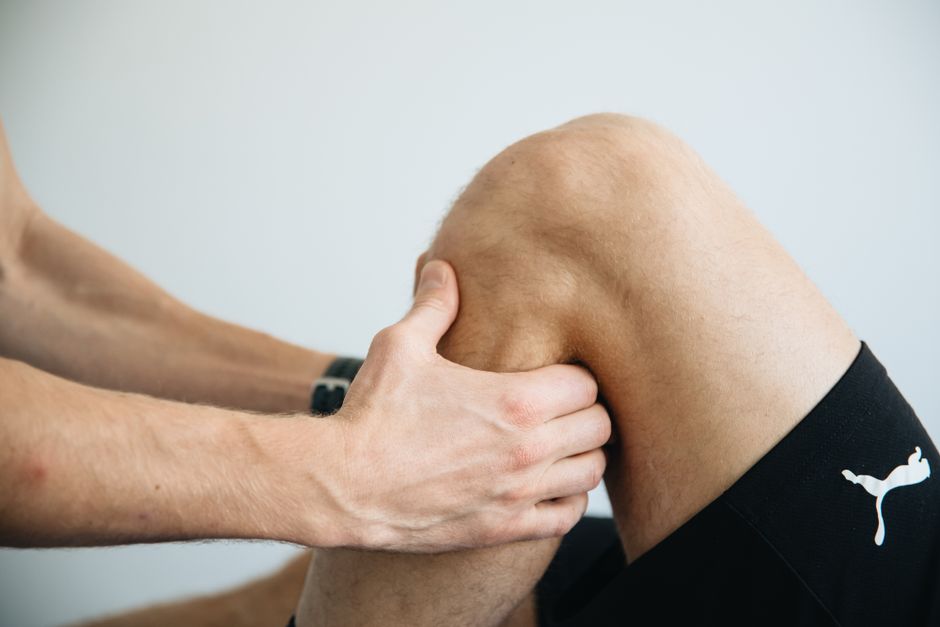

Summer in the Treasure Valley has a way of pulling people off the couch. The Greenbelt fills up, Bogus Basin trades skis for mountain bikes, and weekend trips to Payette Lake or the Boise foothills become routine. Knees that were dormant from November through March suddenly log thousands of steps a day. It is not surprising, then, that we see a noticeable uptick in knee complaints between June and September. The harder question is which of those complaints are just the body adjusting, and which are signals worth taking seriously.
Why Knees Speak Louder in Summer
The knee is a hinge that absorbs the load of nearly everything you do standing up. When activity ramps quickly — a 10-mile hike after a sedentary spring, or three softball games in a weekend — the surrounding muscles, tendons, and cartilage have to catch up. Soreness during this catch-up period is common and usually harmless.
What changes in summer is volume and variety. You are not just walking more; you are walking on uneven trails, pivoting on grass, jumping off paddleboards, and squatting in the garden. Each motion stresses the knee differently, which is why a joint that felt fine in April can start complaining by July.
What Normal Post-Activity Soreness Looks Like
Healthy soreness tends to show up the day after a hard effort, feels dull or achy, and is spread across the muscles around the knee rather than pinpointed inside the joint. It usually eases with light movement, improves over two to three days, and does not change how you walk.
If you finish a long hike at Table Rock with tired, stiff knees that loosen up by the next afternoon, that is your body adapting. The same goes for mild swelling after an unusually long bike ride, provided it settles within a day or two and the joint moves through its full range.
Signals That Deserve a Closer Look
Some symptoms are less about adaptation and more about damage. Pain that is sharp, deep inside the joint, or located on a specific point along the joint line is different from muscle soreness. So is swelling that appears quickly — within hours of an injury — or that does not resolve after several days of rest.
Mechanical symptoms are another category worth paying attention to. If your knee catches, locks, gives way unexpectedly, or makes a popping sound that came with pain, the structures inside the joint may be involved. Meniscus tears and ligament injuries often announce themselves this way, and they rarely improve on their own.
The Difference Between an Acute Injury and a Slow Build
Acute injuries usually have a story: a twist on a wakeboard, a fall on a trail run, a collision at a recreational soccer game. The pain starts immediately, and most people can point to the moment it happened. These deserve prompt evaluation, especially if you cannot bear weight, the knee swells significantly, or the joint feels unstable.
Slow-build problems are sneakier. Arthritis, tendinopathy, and cartilage wear often start as stiffness in the morning or after sitting, mild aching at the end of an active day, or a knee that takes longer to warm up than it used to. Many Treasure Valley adults in their 50s and 60s notice these patterns first during summer, simply because that is when they are asking more of the joint. Ignoring them does not make them go away; it usually just means a harder conversation later.
What You Can Try at Home First
For mild, activity-related soreness, a few days of relative rest, ice after activity, and over-the-counter anti-inflammatories are reasonable. Cross-training helps too — swapping a run for a swim at a local pool, or substituting cycling for hiking, keeps you moving without repeating the same stress.
Strengthening the muscles around the knee, particularly the quadriceps and hips, often resolves a surprising amount of low-grade pain. If symptoms improve within two weeks of these adjustments, you are likely on the right track. If they do not, that is useful information.
When to Call an Orthopedic Specialist
A primary care visit is a fine starting point for vague or mild symptoms. An orthopedic evaluation makes more sense when the pain is specific, persistent, or limiting. Reasonable triggers include knee pain that lasts more than three to four weeks despite rest, swelling that keeps returning, instability or locking, pain that wakes you at night, or any injury where you heard or felt a pop.
You do not need to wait for a referral, and you do not need to be ready for surgery to be seen. Most knee problems we evaluate in Meridian are managed without an operation. The point of an early visit is to get an accurate picture — often with a focused exam and imaging — so you can make decisions based on what is actually happening inside the joint.
A Practical Next Step
If you are dealing with knee pain in the Treasure Valley that has not improved with a couple of weeks of sensible rest and modification, write down what you notice over the next three days: when it hurts, what motions trigger it, whether it swells, and how it affects sleep. Bring those notes to an appointment. That short log will tell an orthopedic specialist more than almost any other piece of information, and it will help you get back to the rivers, trails, and ballfields that make Idaho summers worth the effort.
Featured image: Photo by Funkcinės Terapijos Centras on Pexels.